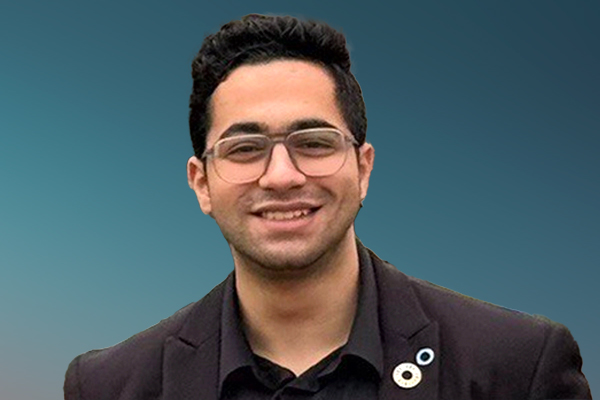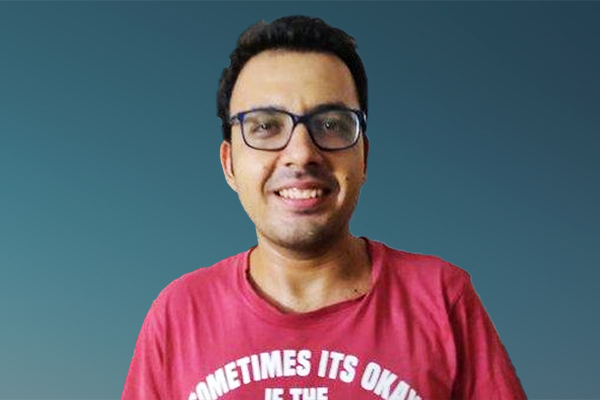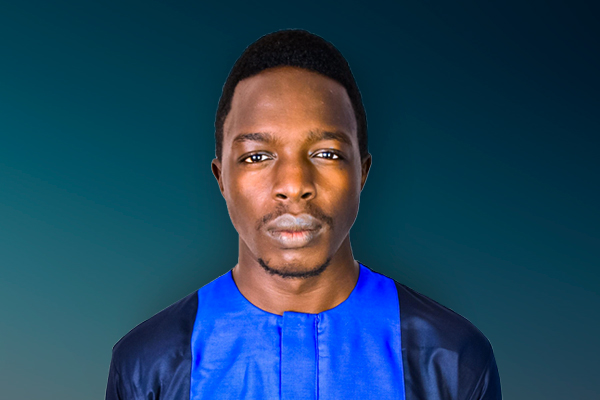
My name is Krish Devnani, and I am from India. I am living with type 1 diabetes, a journey I have been navigating since age five.
As a clinical psychology student and youth advocate, my diary uses visual storytelling to highlight the often-overlooked psychosocial realities of diabetes. Grounded in real-world community action, my goal is to illustrate how awareness and peer support build stigma-free spaces where no one has to navigate chronic illness alone.

23 June 2026
Chapter I : The Pursuit to Normalcy
I spent years trying to be normal. Somewhere along the way, I realised that being different was never the issue.
Subtitles available in 'closed captioning (CC)' of video.
Transcript
“What do you want to be when you grow up?” It's a question every kid gets asked when they are little. Artist, teacher, engineer, doctor, traveler. Me? I just wanted to be normal.
I was diagnosed with type 1 diabetes when I was five. I didn't really understand what diabetes was. I just knew that suddenly there were finger pricks, injections and a lot of questions. There were highs, there were lows, and there was always something to keep track of. I just figured that life seemed to come with a few more calculations than it did for everyone else. Like every other kid, I just wanted to fit in. I didn’t usually talk about diabetes but it wasn’t something I could hide either.
While the rest of the kids ate together, my mum would come to the school to feed me and give me my insulin. I still remember sitting on a swing just like this while everyone else carried on with their day. While nobody thought twice about food, I was thinking about sugars. And something as simple as pulling out an insulin pen in public made me feel different. For a long time, it just felt easier to keep that part of my life to myself.
Without really knowing how to deal with everything, I found my own outlets. I spent hours playing video games, partly because they gave me something that real life often didn’t: predictability.
But eventually I realised that distraction wasn’t the answer. What surprised me was how little people talked about the psychological side of living with diabetes even though it was just as real as the physical one. That curiosity eventually led me to study psychology. I wanted to understand a part of the experience that I had lived with for years but never really had the words for. But understanding the mind was only half the equation.
For most of my life I felt like I was always trying to catch up. I still remembered being the kid who couldn’t do a single pull up or keep up during the fitness tests at school. I wanted to change that and so I started training calisthenics. At first, it was simply another form of exercise, but somewhere along the way, it became something more. I stopped focusing on the things that I couldn’t do and started focusing on the things that I could. Lifting reps and unresolved complexes, I began to realize that progress wasn’t catching up to everyone else and that maybe I had spent too much time trying to be normal.
27 July 2026
Chapter II : The playground
A playground is more than just swings and slides. It’s the quiet comfort of knowing you don’t have to play alone.
Subtitles available in 'closed captioning (CC)' of video.
Transcript
What do you want to be when you grow up?
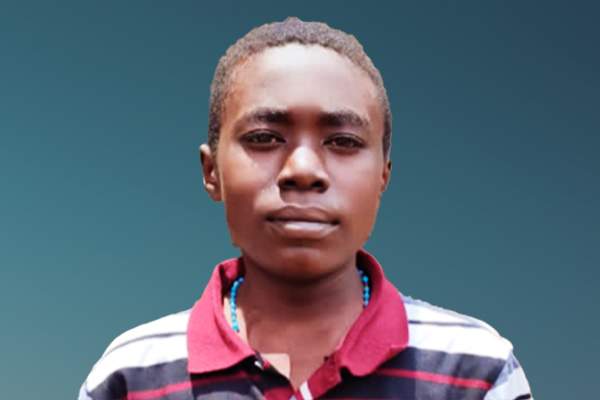
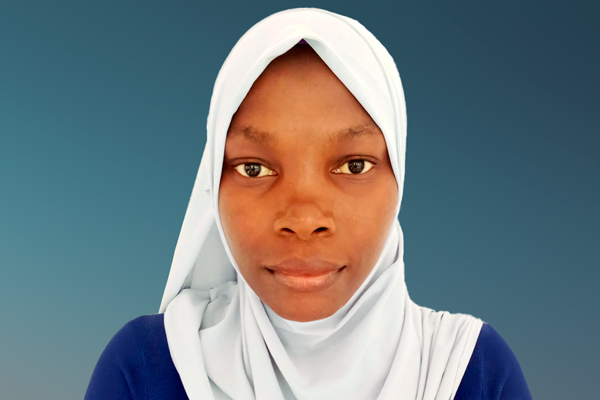
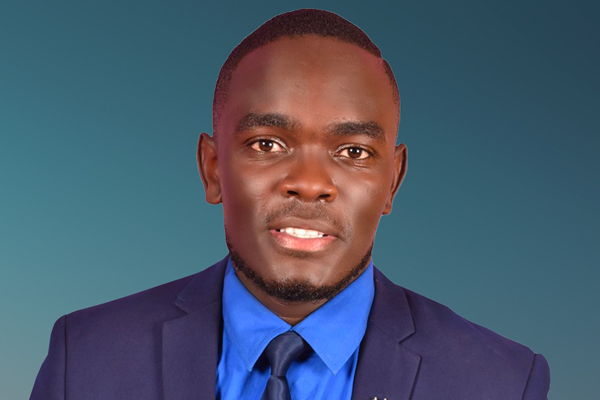
“I want to be a sportsman when I grow up.”
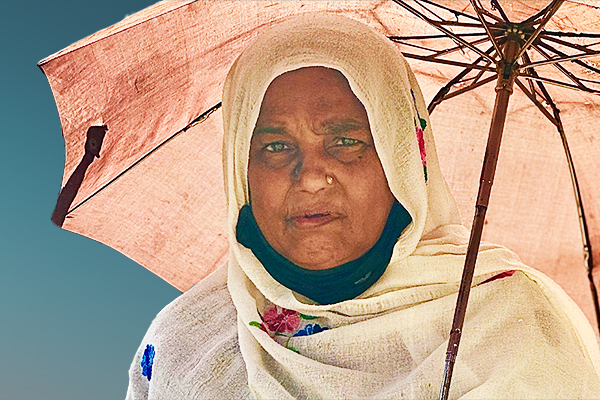
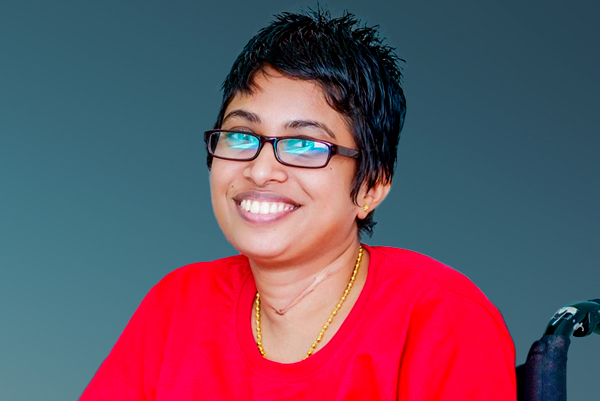
“I want to be a diabetes doctor.”
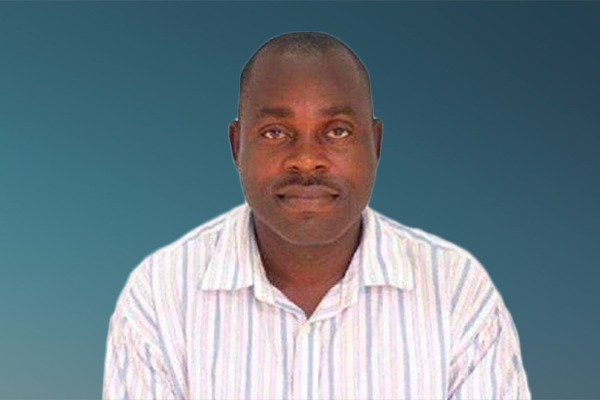
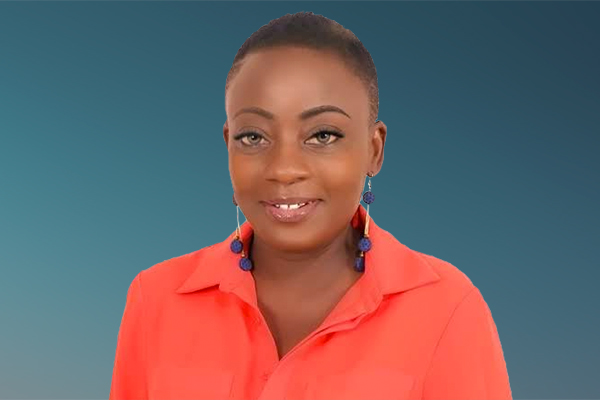
“I want to be an actor.”
When you finally stop trying to be normal, you start looking for the people who let you just be you.
And it’s a strange feeling when complete strangers instantly start to feel familiar.
In 2021, I started a page called Diabeing. I just shared memes; the relatable, sometimes absurd humor of our daily routines. But what started as a shared laugh quickly revealed a shared language. And beyond the screens, there were people living those same stories. Eventually, I found myself surrounded by people who spoke it too.
“And you don't even have to explain how you’re feeling or what you’re going through, they just get it.”
“It’s a place I can go to with all of my dumbest questions and it doesn't matter what time of the day it is, someone will always respond.”
“I got to know that I’m not the only one going through all this.”
“I feel that I can really connect to them.”
Many of us were searching for that exact feeling. Not sympathy. Not medical advice. Just the quiet relief of an inside joke. Because out in the real world, the sheer volume of what we manage is completely invisible. So much of our energy goes into trying to fit in, politely smiling through conversations we’ve had a hundred times.
“So there are battles that I carry on my own which I can't tell people each and every time.”
“The mental exhaustion of looking at sugars every 5 minutes and looking at the highs and lows.”
“This one thought always wanders in my mind, that these complications are going to hit me one day and how am I supposed to handle them.”
So many of us carry that exhaustion quietly; the burnout, the constant anxiety, the pressure to act like everything is fine. But stepping into this community, I watched that isolation begin to disappear.
“I saw him take insulin on his own in public. Earlier he used to hide and take it.”
“All her friends and teachers were really supportive so I didn’t feel she would be alone anymore.”
“This group has helped us in like, you know, overcoming our problems we had at that time.”
In this space, we trade the pressure of performing for the rare freedom of simply existing. Nobody has to pretend, and nobody has to explain.
That’s how complete strangers become familiar, because none of us were meant to figure this out alone.
And once we find people who speak our language…and finally stop pretending... what do we do with all that leftover strength?
21 September 2026
Chapter III : The butterfly effect
Just when the caterpillar thought the world was over, it became a butterfly.
Subtitles available in 'closed captioning (CC)' of video.
Transcript
Scene 1: The leftover strength & the stigma
Once we find the people who speak our language, and we finally stop pretending... what do we actually do with all that leftover strength?
For me, the answer became impossible to ignore. I couldn't change the childhood I had. But maybe I could help shape the one someone else is about to begin.
Scene 2: Joining the movement
So I started volunteering with the Blue Circle Diabetes Foundation, joining a movement already in motion. Stepping into their ongoing awareness drives across classrooms and workshops meant I finally got to be part of the exact conversations I wish had existed when I was growing up.
We show up to stand as living proof that the hardest part of living with diabetes isn't biological—it’s psychosocial. Every conversation that replaces societal stigma with empathy and understanding... reminds me that awareness isn't just a campaign.
It is the first line of defense. It breaks the isolation, and dismantles the silence.
Scene 3: The systemic demand (actionable Policy)
Awareness can start a conversation. But lasting change needs to be built into the system.
Policymakers and healthcare providers have a role to play here.
We need post-diagnosis care to look beyond mere management of the condition—and recognise the psychological and social realities that come along.
That means integrating clinical psychologists into diabetes care, making emotional well-being part of routine follow-up, and equipping diabetes educators to recognise distress and burnout early.
The tools are already there. What we need is for this support to become part of standard care.
Scene 4: The butterfly effect (the ending)
And that brings me to the Butterfly Effect.
In chaos theory, it describes how a small change at one point can create consequences far beyond where it began.
A diagnosis is one of those points.
The way a child is supported at that moment can shape how they understand their condition, how a family responds, and how that child grows up with it.
One conversation. One intervention. One decision to look beyond the numbers.
Small changes can change trajectories.
And if we get that starting point right, perhaps a diagnosis doesn’t have to decide what comes next.
Perhaps a child can still grow up with the freedom to answer the question that truly matters:
"What do you want to be when you grow up?"
NCD Diaries
We change the narrative the moment we share it.
Krish Devnani, lived experience of diabetes, India
About NCD DIARIES
The NCD Diaries use rich and immersive multimedia approaches to share lived experiences to drive change, using a public narrative framework.